
Charlotte ends the year with a high apartment vacancy rate but record number of new units
Charlotte’s apartment rental market is ending on an interesting note as the year comes to a close.
Apartment vacancy rates sat at a high of about 12.7% at the beginning of December, according to Chuck McShane, director of market analytics with real estate research firm CoStar. But, the city has seen a record number of new apartment units and a record number of leased apartments.
And those numbers will flip in the coming year with slower construction of multifamily properties.
Increase in apartment supply
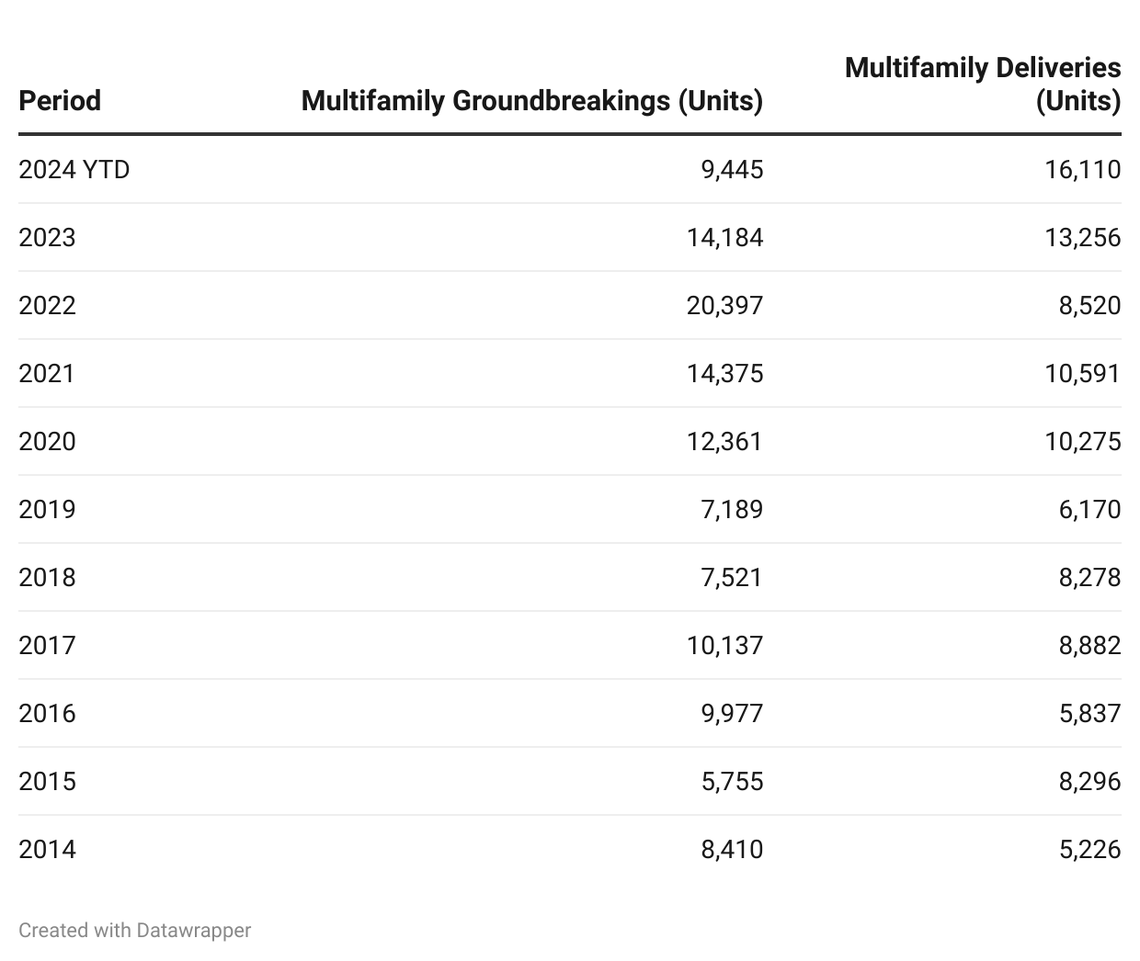
In 2022, developers broke ground on close to 20,400 apartment units, according to CoStar data, setting a record dating back to 2000.
Typically, developments take about two to three years to complete, McShane said, so most of those units opened this year.
About 16,110 units have been delivered so far this year, which is another record. For context, about 13,250 units opened last year and even fewer apartments opened in 2022 with about 8,500 units.
The high number of units increased supply, and demand couldn’t catch up.
“Charlotte regularly led the country in terms of its construction… 2022 was the peak for new groundbreaking and that’s a record we probably won’t see again anytime soon,” McShane said. “2024 is probably going to be a record year for... new apartment units and that is really what’s driving the increase in vacancies.”
The overall vacancy rate includes all apartments. With the sharp increase of available units, the vacancy rate also increased.
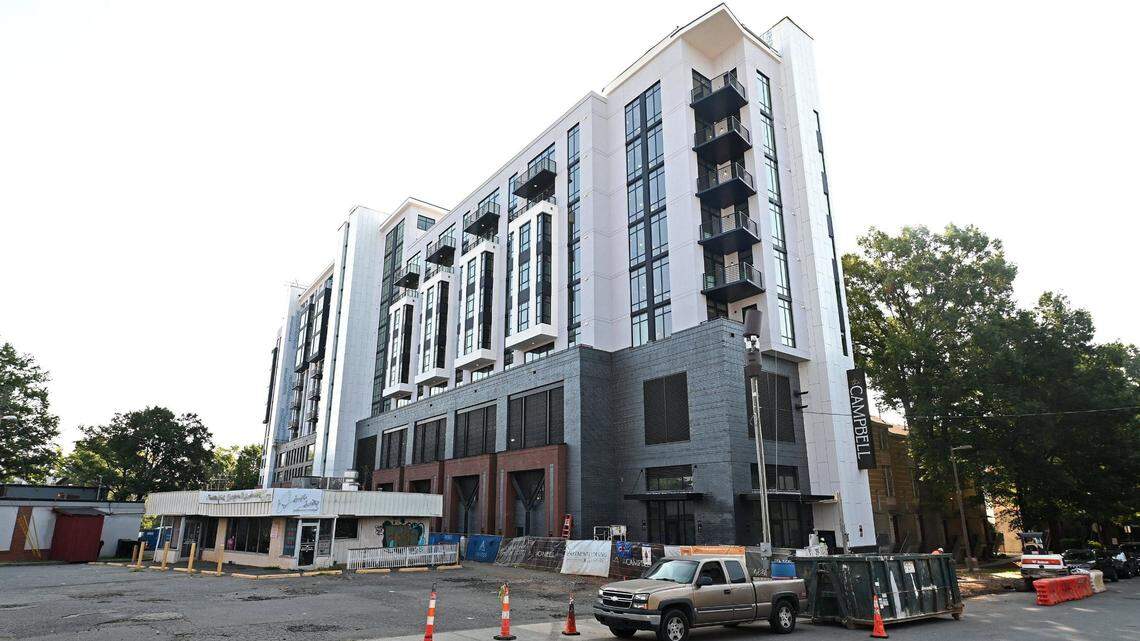
And many of the vacancies are concentrated in areas of Charlotte with new apartment construction, such as lower South End and in north Charlotte.
But looking at “stabilized vacancy,” or vacancies in apartment buildings that are 18 months or older, that rate is much lower, sitting at about 8%.
Demand catching up
Demand is still high, despite what vacancy numbers say. One way to measure demand is by calculating net absorption rate, or the number of move-ins minus the number of move-outs.
About 12,000 units have been leased this year, another record, McShane said. High absorption rates signal strong demand.
The last time Charlotte saw a high absorption rate was in 2021 when far fewer units were available, McShane added. But the city has had a positive rate since coming out of the Great Recession.
Competition in the market
Besides the supply increase contributing to vacancies, it’s also contributing to lowered rent costs for market-rate units.
The last time rents decreased in Charlotte, according to McShane, was in the 2009 through 2011 period during the Great Recession.
With data from CoStar going back to 2014, rents have increased gradually besides a drastic spike in 2021.
But last year and this year, rents decreased by 0.9% and 1.2% respectively. The average asking price for rent is around $1,608, according to CoStar.
This slight decrease is because supply leads to a need for competition.
“Now that we’re seeing more units come online, properties have to compete on price to get renters,” McShande said. “Rents are coming down. Concessions are going up, so offers of free rent are out there.”
These lowered rents are again in high-construction areas. McShane said rents in lower South End have decreased by about 4%.
But changes are coming
Construction has slowed. Since that peak in 2022, groundbreakings have decreased by about 50% this year. Developers broke ground on a little under 9,450 units this year.
Less construction means less supply and that will lead to a decrease in vacancy rates, an even bigger increase in demand and ultimately higher rent costs.
These numbers are cyclical, McShane said. The city won’t see record groundbreaking like it did in 2022 but there are large developments coming heading into 2025 through at least 2028. There’s the River District project, Eastland Yards, Providence Road and a number of other developments.
But with 117 people moving to Charlotte every day and the way that number has increased yearly, this story of “excess supply” and “high” vacancy rates will soon be a story of demand, yet again.
“It’s an ebb-and-flow thing,” McShane said. “This is really a supply driven growth in vacancies. The demand is there. This type of vacancy level is going to be short lived. The decisions that are being made today on groundbreakings are already setting the stage for a tighter market again by ‘26, ‘27.”
This story was originally published December 18, 2024 at 6:00 AM.
