Metal detectorist revisits farm where he found gold artifact — and finds another

A resident of southern Norway has a knack for finding things. Recently, he revisited the site where he’d previously found a rare gold artifact — and found another ancient treasure.
Metal detectorist Sverre Næsheim visited a farm in Hovland in 2019 and unearthed an ancient gold item known as a “gullgubbe,” or gold foil, the Cultural Heritage Office of Vestfold County Municipality said in a May 15 Facebook post.
At the time, Næsheim’s discovery was a first-of-its-kind find for the county and sparked a monthslong georadar survey of the area, officials said in Facebook posts from 2019 and 2020. The scans identified traces of a large building, likely a gathering hall.
This spring, officials allowed Næsheim to return to the now-protected area in Hovland to continue searching for artifacts, the county said. It didn’t take long for him to find something.
For the second time, Næsheim found a 1,200-year-old gold foil, officials said.
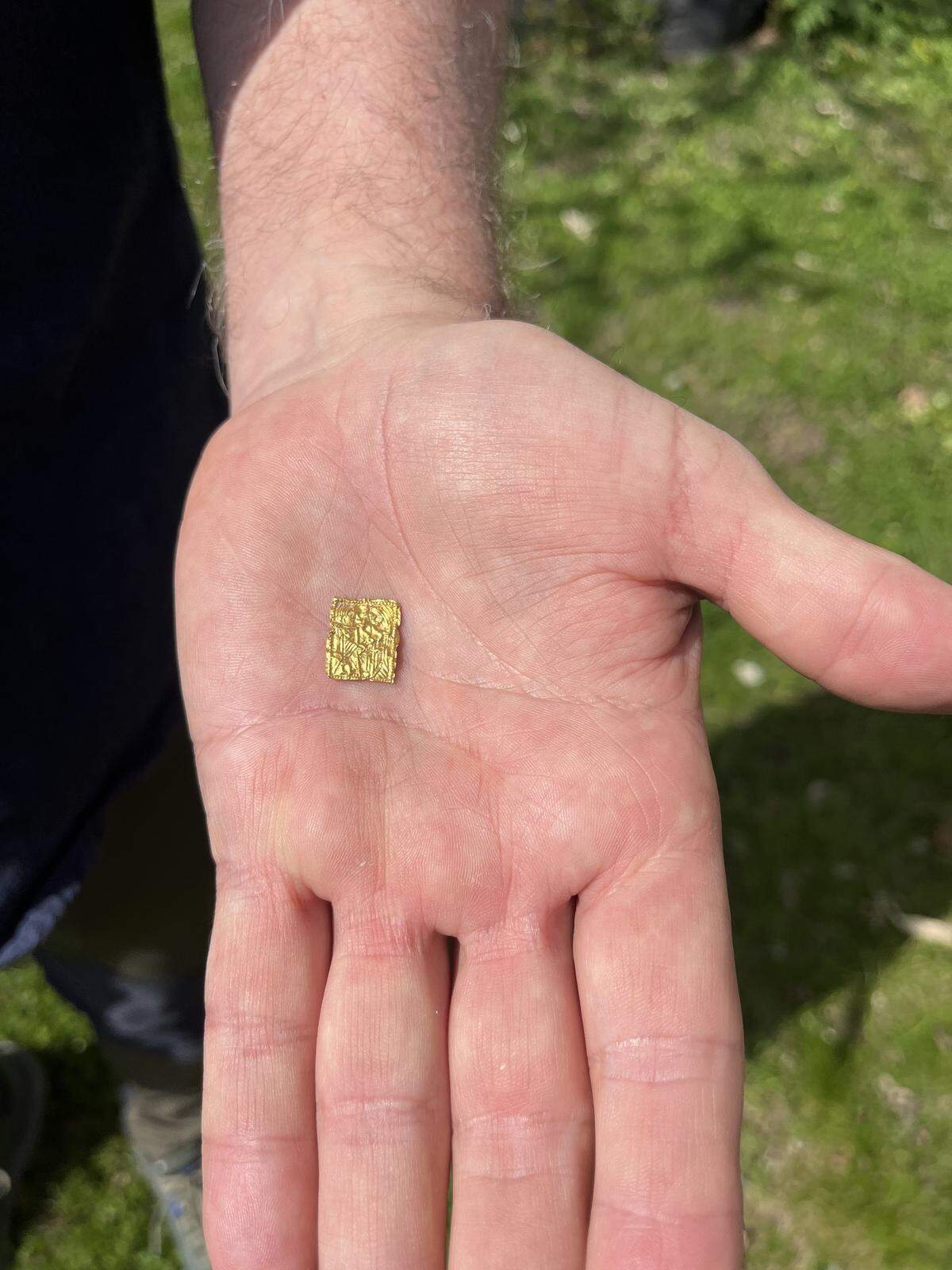
Gold foils are thin pieces of gold stamped with designs and generally date between 570 and 800. The designs usually include people or animals and are typically interpreted as depicting a mythical wedding between a Norse god and a giant.
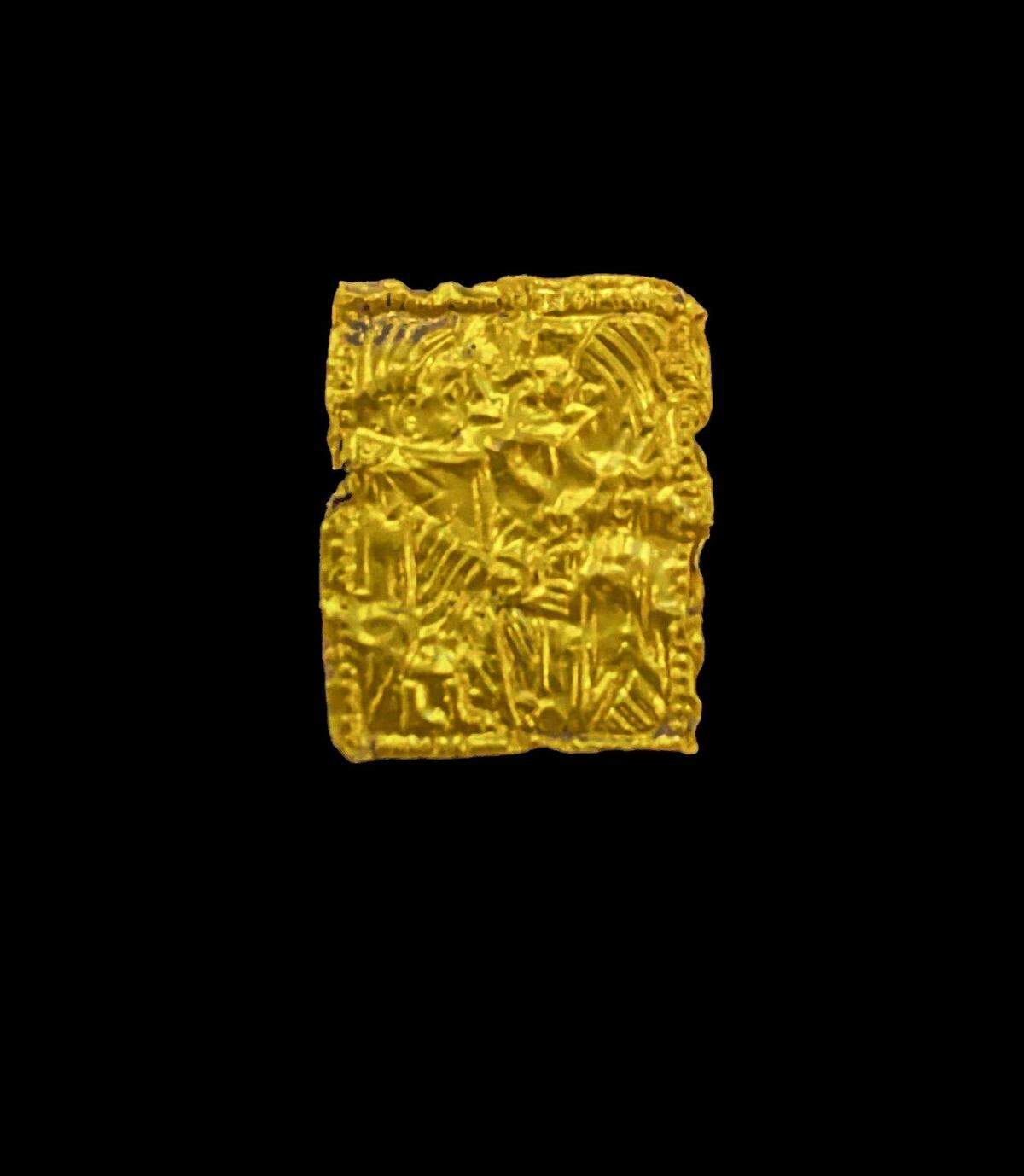
Næsheim’s newly unearthed gold foil is roughly half an inch in size and shows a couple looking at each other, officials said.
A photo shows the design up close. The figures’ heads reach the top corners, and the person on the left seems to have an outstretched arm. The entire scene is ringed by a cord-like border.
Gold foils have been found in Norway, Sweden and Denmark. Archaeologists don’t know the purpose of these tiny artifacts but generally link them to ritual ceremonies.
Like other sites where gold foils have been found, Hovland’s name shows a link to Norse religion, officials said in 2019. In Old Norse, the term “hov” referred to a temple or other site for cult activities.
County officials said they plan to continue searching the Hovland site in hopes of finding more artifacts.
Hovland is a small town along the southeastern coast of Norway, and a roughly 70-mile drive southwest from Oslo.
Google Translate and Facebook Translate were used to translate the Facebook posts from the Cultural Heritage Office of Vestfold County Municipality.
This story was originally published June 3, 2025 at 9:34 AM with the headline "Metal detectorist revisits farm where he found gold artifact — and finds another."