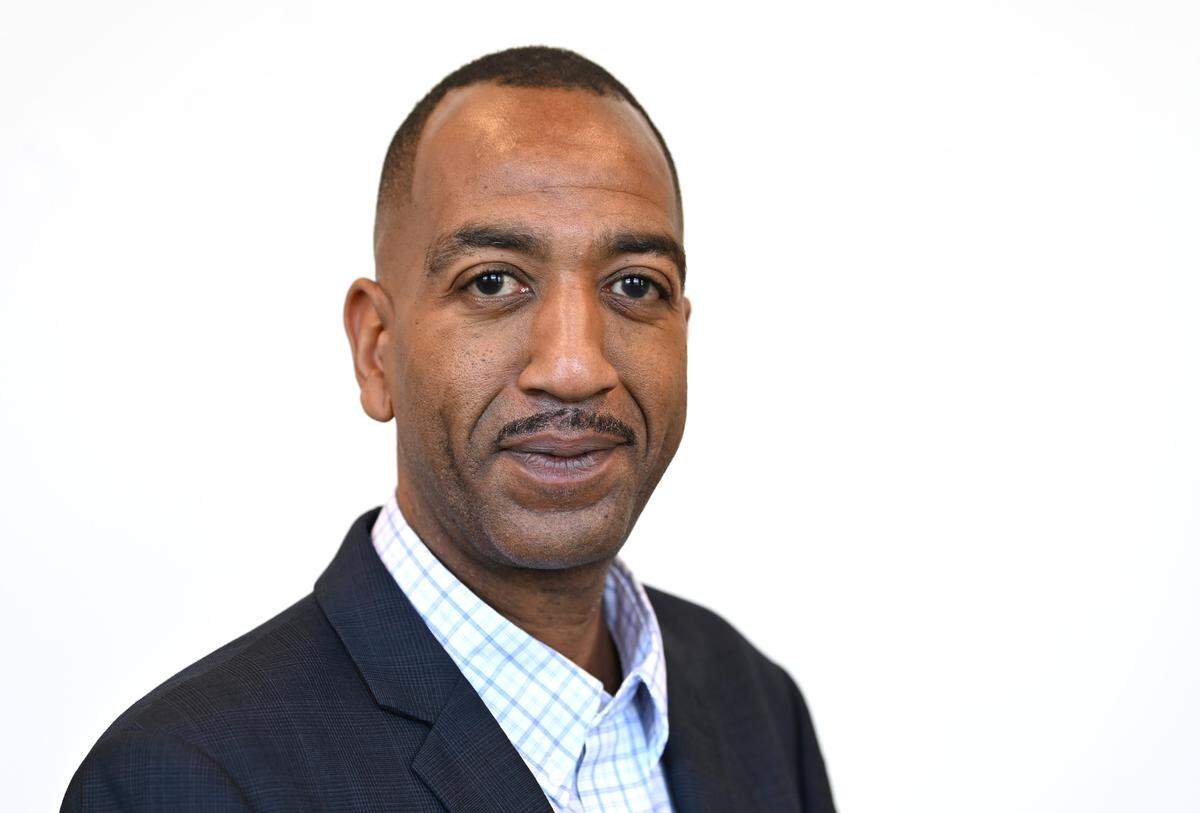
How the Charlotte Hornets are turning into one of the NBA’s rising teams
Situated inside a luxury hotel, a good LaMelo Ball alley-oop pass away from Spectrum Center, the architect of the Charlotte Hornets’ resurgence is relaxed momentarily.
While the daily hustle is just beginning for many, evidenced by the amount of foot traffic spotted passing by through the glass windows of the hotel’s restaurant, Jeff Peterson settles in to momentarily enjoy the Hornets’ metamorphosis and enthusiasm engulfing the franchise.
“It’s been awesome,” Peterson, the Hornets’ president basketball operations, told The Charlotte Observer. “I knew when I took the job that Charlotte has one of the most robust and passionate fan bases. I think the original Hornets led the league in attendance in eight straight years or something like that. This area of the country, the Carolinas, is very passionate about basketball. So, it makes me happy because the fans deserve it.
“We played in Brooklyn and there were a ton of Hornets fans in there. The fans are deserving. I’m very excited for the players and the coaches, too, just to be able to see it and feel it. The fans have been tremendous, and I feel like I’m just a steward of the team trying to carry out a vision to help them, help the fans achieve what they want to achieve and feel a part of it.”
Hired by Hornets co-owners Rick Schnall and Gabe Plotkin in April 2024 to bring the franchise out of its decade-long doldrum, and joined at the hip with coach Charles Lee, Peterson has quickly lifted the Hornets to respectability, pushing Charlotte among the NBA’s rising teams.
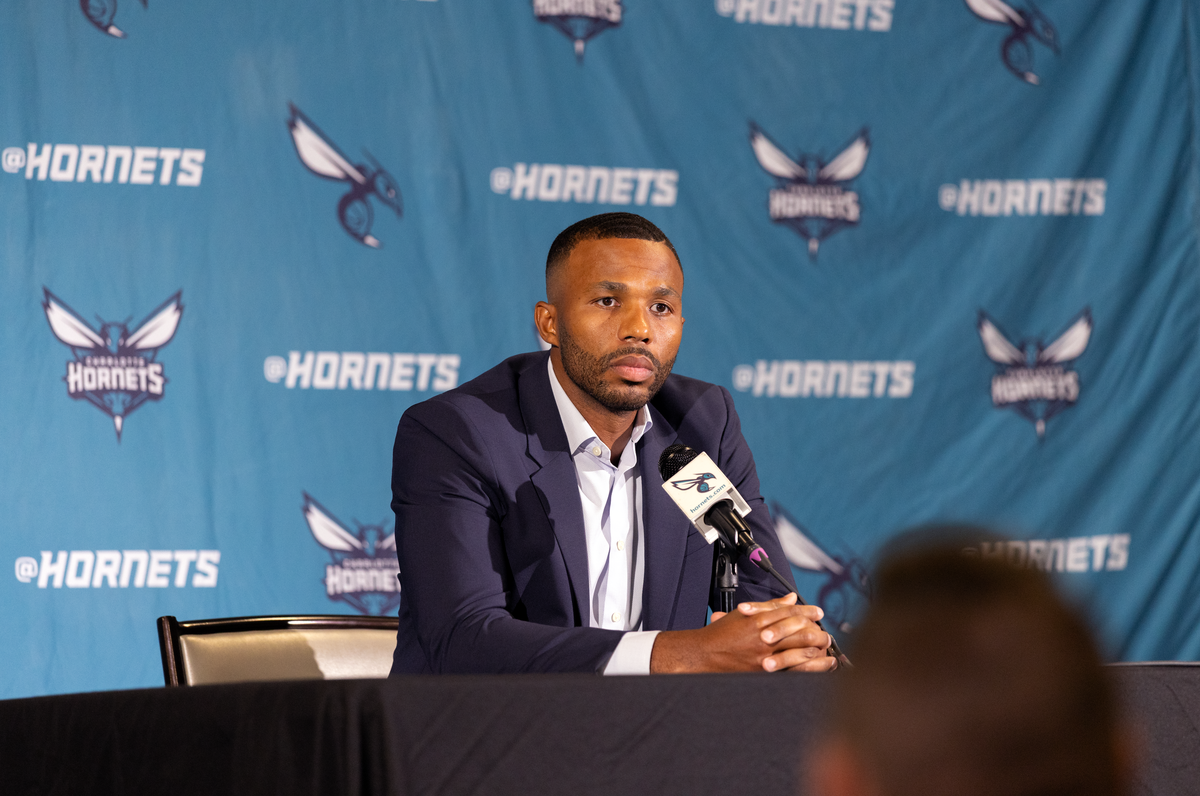
He’s surely among the candidates for the NBA’s executive of the year, buoyed by heady transactions such as trading for North Carolina native and former Tar Heel Coby White.
Peterson has been on the job for 24 months and the ride is loaded with challenges. Arduous tasks that made him cringe internally even though they were a necessity.
“When I first got here, having to let people go,” Peterson said, reflecting on the most difficult duty since taking the organizational reins. “Look, it is part of the business, but we’re still dealing with human beings at the foundational level. So, not even close. That was the hardest part.
“People have families and kids and whatever it is, so I definitely don’t take that part of the job lightly because you are impacting someone’s livelihood. I’ve been preparing for this moment. I have a great group around me that helps make me look smart. But, yeah, that’s been the toughest part by far.”
Peterson’s tactical approach steeped in reshaping the Hornets by emphasizing player health and development, a team-first culture and the importance of acquiring assets springboarded the Hornets into the national conversation again.
Getting flexed into prime time, akin to Tuesday’s date in Boston, and playing in meaningful games in late March and early April is a signal Peterson’s vision is working. Already.
“The thing that excites me the most or brings me the most joy is that we implemented the process when I first got here in multiple different facets of the organization, and we’ve been able to stick to those processes,” Peterson said. “That doesn’t mean that the result is always what we want it to be.
“But I sleep well knowing that we had a process going into the draft, and trade deadline and free agency, and we were able to execute what we wanted to execute. So, I’m not necessarily surprised that the team looks better this year. Not surprised because the process started when I first got here, but even this past summer. I’ve never been a part of a team where the entire team was here this summer working. And that was on their own.”
The Hornets’ independent, unprecedented player-driven offseason workouts keyed the culture shift. The players are policing themselves in the locker room, a critical characteristic for building winning teams.
Shifting the Hornets’ mentality
Charlotte heads into the final weekend of the 2025-26 regular-season calendar, semi ahead of schedule with an opportunity to make some noise in the postseason for the first time in a decade. This crop of Hornets, despite a 4-14 start, rattled off the most victories since 2021-22 and cemented just the franchise’s sixth season with 43 or more wins following the return of pro basketball to the city in 2004-05.
Leading into this week, Charlotte’s 32-14 record since Jan. 1 aided in garnering the No. 1 net in the NBA at 11.5 and the Hornets’ offense ranked tops in the league with a rating of 121.3. They also boasted the fifth-best defense, yielding 109.8 points per game.

A shift in mindset is apparent. Check out the vibes following defeats. It’s melancholy.
“You hit it spot on,” Peterson said. “It cuts deeper now when you lose. Before, I think it was just, ‘All right, we lost. We got another game in a couple days.’ Even, if we’re being honest, when we lost, well the Hornets were supposed to lose, right? It’s kind of that mentality for some.
“But now it’s like, ‘No, we lost, like. Screw that, we’ve got to figure out how to solve this. What you’re seeing too is like the margin of error now is so small in terms of winning and losing games.”
Boasting the third-youngest roster in the NBA, the growing pains are going to be unavoidable. Especially with three rookies as significant contributors.
Headlined by Kon Knueppel, who’s a candidate to be the Hornets’ first rookie of the year since Ball picked up the honor in 2020-21, the additions of Sion James, Ryan Kalkbrenner and Liam McNeeley easily represent the team’s best collective class in a very long time.
“All those guys, they all deserve credit in their own way,” Peterson said. “ Part of our job is to do background work on these guys as soon as they become relevant, in terms of potentially being able to be drafted or whatnot. So, the thing that continued to come back on Kon is he’s so competitive. Maybe the most competitive guy that people coached, and that didn’t just start at Duke. That goes back to middle school and high school.
“I hate losing more than I enjoy winning. Losing keeps me up at night. And I know that’s how our rookies are wired as well. … Having someone else come in or two or three more people come in and kind of just give a different perspective, give a different look at things, I think that helps. It’s helped all of us. It’s helped me. I think we’ve all grown from it.”
Knueppel appreciates Peterson’s similar viewpoint.
“I remember talking to him when we were 4-14,” Knueppel said. “It’s like losing is never OK. As a player, most players feel that way. Some teams would have just packed it up and been like, ‘All right, we’re tanking the rest of the year.’ And we didn’t.
“He obviously saw some success, made a run at Coby at the deadline, which is big. Still being out here trying to win games, it’s a cool thing and that belief from the GM speaks volumes.”
‘That was Jeff Peterson’s directive’
Peterson’s fingerprints are all over the Hornets, even in facets not easily visible to most. Like player maintenance, with an eye on everyone up and down the roster.
That includes Ball.
Injury-plagued for all but one of his initial five seasons in the league, the sixth-year star point guard has logged action in 70 games leading into Friday’s matchup with the Detroit Pistons. That’s the second-highest total since he entered the league in 2020. He hasn’t missed a game since Dec. 18, suiting up in the Hornets’ past 53 outings.
Apparently, the 24-year-old’s surgically-repaired ankles are holding up well.
“We’ve got to give credit to LaMelo himself,” Peterson said, “because ever since I’ve been here, he’s been serious. I know last year he got banged up and just couldn’t finish the season. But even this summer, he took it extremely seriously, in terms of being in the weight room constantly. He put on 10 to 12 extra pounds of muscle, which helps.
“It’s certainly going to help in the playoffs once we get there and all, just because the game becomes more physical, it slows down. Teams know LaMelo is the head of the snake, so if we get him frustrated or whatever it may be. ... So again, I’ll go back to the work that he put in this summer and then just being extra diligent with his rehab.”
That’s when Peterson, unsolicited, offered up insight into a situation that took on a life of its own for a brief spell in January: A minutes restriction that led to Ball not starting in games on consecutive nights.
By the end of the month, everything was back to normal. No more minutes edict.
“I want to be crystal-clear on this because I know Charles caught a lot of flak on this early on about the back-to-back,” Peterson said. “That was me. That was Jeff Peterson’s directive. So it has nothing to do with Charles or his rotations. The goal was always, ‘How can LaMelo play the most games possible?’”

In turn, that gives Lee and everyone else a chance to better succeed.
Peterson praised the pedigree of Lee, a two-time world champion as an assistant, and mentioned that players fall in line with his no-nonsense standards. Lee has a distinct trait that allows him to connect with individuals, adapting to each player’s style.
“If you’re not going to do whatever the game plan is you’re just going to come sit by him, and he’s fine with that,” Peterson said. “I know guys respect that. It may suck in the moment, you may be embarrassed in the moment, you may not like him in the moment. But if you’re truly about getting better, you realize that it’s never personal with Charles. He just wants what’s best for the team, and he has been there. He’s seen it. He’s won at the highest level.
“Charles is also a guy that wants to continue to get better himself. So he’s mostly trying to figure out how he can get better as a coach and push himself. He teaches daily improvement to the guys. He can be hard on guys, but it’s just the way he grew up.”
Having Lee, who boasts a coach of the month award on his resume, in place along with a healthy and available Ball and a rising young core, puts the Hornets in position to be a major player in the offseason for a place that Taj Gibson called “a gold mine” a year ago and Charlotte’s own Seth Curry declared there’s “a new start around here.”
During Peterson’s tenure, he’s focused on methodically accruing draft assets, which aided in moves like acquiring White from Chicago prior to the trade deadline. The Hornets boast 11 first-round picks along with 14 second-rounders over the next seven years, valuing even marginal improvements such as pick swaps or extra second-round selections.
Expect Peterson to remain vigilant on league-wide activity as free agency and trade window opens, reassessing the roster-building timeline based on league developments. Precisely what tweaks could be in the eventual works are unclear, particularly when it comes to what should be a vibrant trade market.
Repeatedly since joining the organization, Peterson insists the Hornets won’t skip steps to be competitive. With the team now showing signs of serious improvement, he’ll have to decide which direction to go in for 2026-27 and whether it’s time to take that next leap in the overall Eastern Conference landscape and perhaps land a key veteran addition via trade.
“I think there’s a lot of variables that go into that,” Peterson said. “I think sometimes people think trades are easy. They’re not. You’re dealing with another team, they have to want your player or want to trade that player that you may want. Salary’s got a match. There’s just a ton of variables at stake. So, it just kind of depends on which team you’re dealing with or what not, what the market is.
“I certainly don’t want to be in the business of overpaying for a player at this point. There could be a point where you have to do that. It’s not an exact science. You’re certainly going to get something wrong. But you’ve got to be pretty sure, the confidence interval has to be high if you’re going to put all your chips in and go get a player.”
This story was originally published April 9, 2026 at 5:00 AM.